
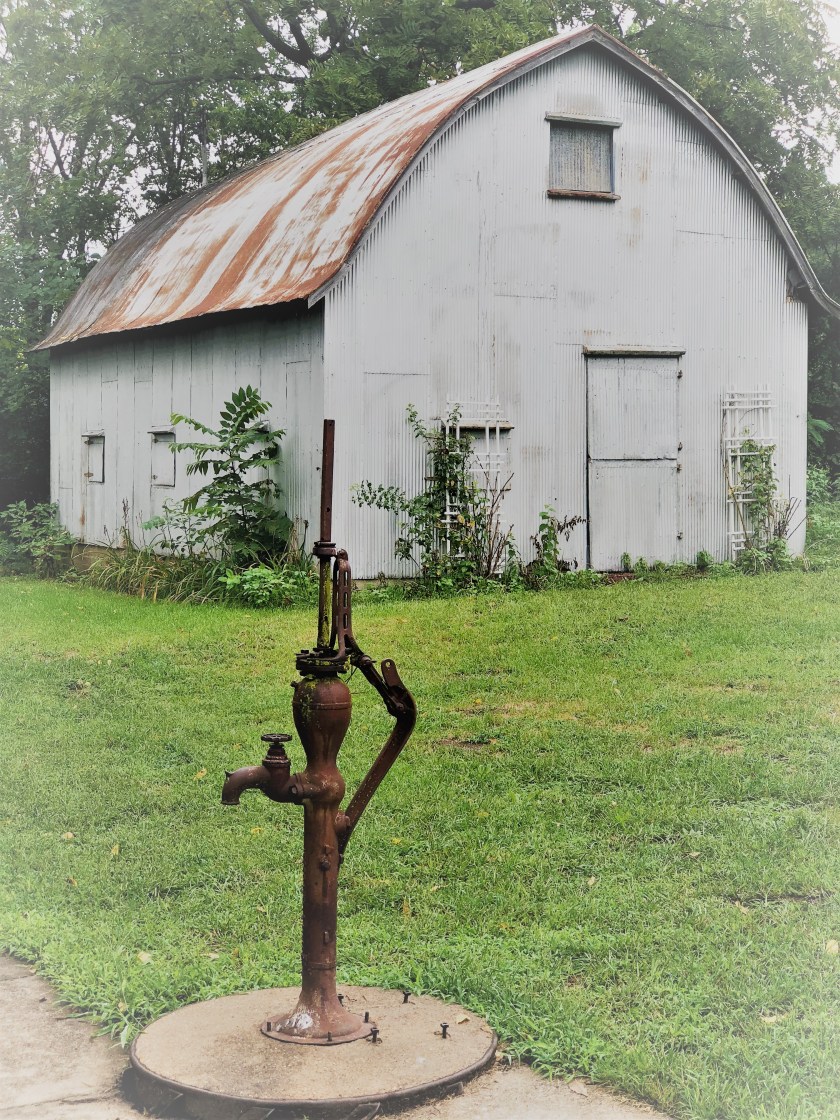
I feel ‘happy as a lark’ beginning this ‘new chapter’ in my life. Being happy brings out the cliché in me. For the first week after moving into our new home, I couldn’t seem to do anything but grin and say I felt like “the cat that ate the canary.” I’m finally where I’ve wanted to be. My husband, sons and I returned to central Missouri and my roots and family after several years away for graduate work. I’m busy in what you might call a golden season, settling sons Andy and Jake into school in our tiny town and working alongside husband Tim to set up a counseling practice. In the meantime, we’re falling in love with our new (118-year-old) farmhouse and barns. I may be wildly creative when I’m feeling dismal, but I’ll take happy with a side of worn-out phrasing any day.
Happy as I am, though, I admit to feeling daunted by this idea of a new season or chapter. What if I do something to sully all this freshness? It’s much the same feeling I have putting my fingers to the keyboard to start this blog. After all, how do you pick up right in the middle of your life and . . . just begin?
I suppose I could begin with why I am writing. (Hint: it is not to share cooking tips, platitudes about family, or DIY ideas. I find these helpful from time to time, but they are not my area of expertise, and I know many others are covering them very well). I am writing because I couldn’t not write. Never could. Not as a little kid carefully storing up sights sounds, and bits of dialogue because I longed to work them into a story one day. Not as a lackluster teenage employee, scribbling on napkins when I was supposed to be working. Not even as an English major in college, who often found some lonely loft in which to toss aside the books and great thoughts of others to go all Walt Whitman—making lists and exuberant run-on sentences—about the things I loved. (Yes, professors. I know the poet Whitman did more than run-on sentences. Perhaps most importantly, he made known what had made him—America, Manhattan, the Civil War—and he did so in a way that resonates even with those who never experienced these things.)
|
. . . there is a hushed sanctity in so many things we don’t readily see as sacred . . . |
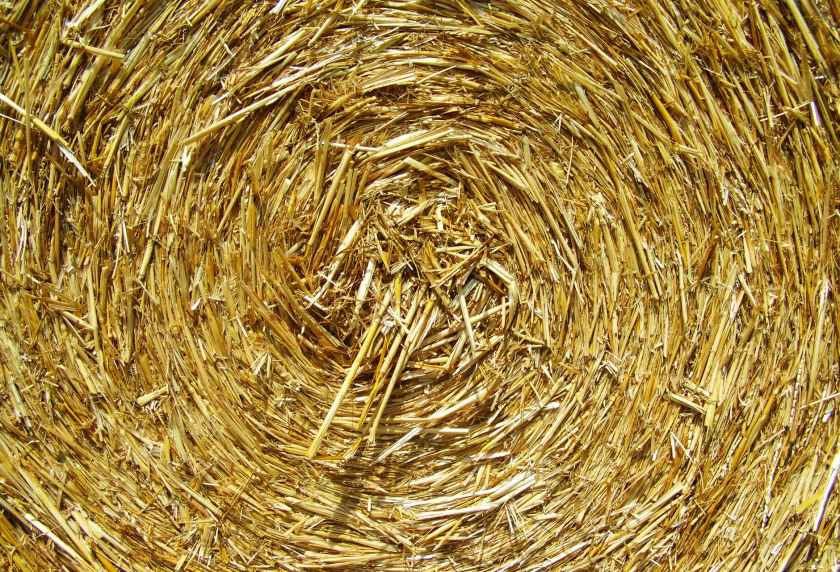
I guess I could say I write for similar reasons. I have always wanted to share my growing up in the Ozarks, my family, my Missouri river banks. It’s a kind of irrepressible thing, this desire to reverberate my own particular strain of “All things wise and wonderful . . . the Lord God made them all.” It is as if, in my mind, you can’t have truly loved something until you have longed to share it with the world. And so, even as the ‘great American novel’ eludes me and family and work fill my hours, I find I still come up sputtering to my notebooks about . . . hay! The way it felt to play in mountains of hay. To come out with hay sticking to my braids. Hay, the color of preserved sunshine. Through my mind race fragments and phrases about running. Running and never finding I was too tired to run—in my cut-off shorts and brown bare feet. About peep frogs, maple
leaves, and fields in the breeze. I pop up Word documents and exhale hallelujahs for barns and big Ford cars, for paper baskets of fries from the local drive-in. Do you know why? It cannot be because these things are perfectly pure or rare, environmentally friendly or health conscious. It must be that there is a be a hushed sanctity in so many things we don’t readily see as sacred; there is depth to them. The tin-roofed barn of my growing up was not a barn but a stage for The Adventures of Cousins and Kittens. Those ‘lead sleds” of my memory were not just cars but of the ability to connect with those we care about. Food also meant family and fun.
And so, I write Ode to Fourth of July, to freedom expressed in Chinese poppers, for smoke hanging like a screen in the humid Ozark air. I write a hymn for bumblebees in clover and fresh honeycomb scooped into a clean margarine tub. For a cellar full of green jars and a fragrance reminiscent of dill. For freshly tilled garden soil accommodating my toes like velvet. I’ll write rabbit trails for the rabbit trails I used to find in tall grass. I’ll make homage for the things to which I cannot return: a “Dinner!” cry from the kitchen porch that sent us kids running from our play in the woods or fields; the scent of yeast and sage that met us before we even reached the door; Grandma’s curly head bent over the stove as she ladled dumplings from a dented pot that now occupies my shelf because she is gone.
Even for those places to which I’d rather not return, a reverence of words rises like fireflies out of the grass. A lonely cemetery. A sympathetic tree over a stone. A name and dates meant to sum up the brother whose eyes formed the horizon of my childhood, because we did everything together. But I remember playing with Levi nearby on Grandpa’s stone, because its marble vase reminded us of the smokestack on a choo-choo train. We played there with no notion of the significance of the plot that waited behind us. We were blessedly ignorant also, that attached to Grandpa’s stone waited one for Grandma who was then robust and fussing over the silk flowers she had brought for her love. Odes and hymns. For the mysteries of time. And much more for the One who redeems its passing, through whose grace I can respond to this scene with awe . . . for the innocence. For the love.
|
One way or another . . . we sing what we are. |
I think we all have some longing to distill our experiences into story or song . . . or works of wood or paint or cloth or ingredients . . . One way or another, like the bobwhite or whippoorwill, we sing what we are. Maybe this is our innate hymn and hallelujah. All of this ‘writing what we know,’ is not a suggestion that our familiar things are the only or superior things, but that they are, quite simply, the framework we’ve been given through which we connect with God (as He meets us where we are) and reach out to others. Our moments become the “dust of the earth” from which God is forming our being. They are the language through which He reaches us and redeems our passing years with restored innocence and unquenchable love.
This is why I write: to bear witness to the things I have seen and heard. I am not a theologian, a philosopher, or a scientist. I am not likely to unravel the mystery of the ages. (And again, I am not a chef-turned-blogger . . . though, being a mom and all, I would find some culinary talent most convenient!) But I can be a witness to the things I’ve seen and heard. I can draw out the meaning in a moment, and I can share. That’s the beauty of it. Anyone can.
I will sing of the steadfast love of the Lord forever; with my mouth I will make known your faithfulness to all generations. – Psalm 89:1 (NIV)


This is so refreshing and such a blessing to read! Thank you💗
LikeLike